 Elevon in Forbes
Circadian Science, Turned Into What to Do at Seven in the Morning
Kronx is a science-backed guide to healthy living and longevity. We designed the product: 36 or more screens for iOS and iPadOS across four habit modules, a Circadian Ring that plans the day, a single Wellness Score, and streaks and badges that motivate without turning rest into a performance target.
Client
Kronx
Industry
Agencies & consultancies
Solution
Mobile product design for iOS and iPadOS (UX/UI)
Deployment
Live on the App Store
UX and UI for iOS and iPadOS. In the App Store in five languages, at 13.7 MB.
The Challenge
The science of circadian rhythm is not in short supply. Morning light, the timing of exercise, when to eat, when to stop looking at screens: all of it is published, discussed and popularized. What is missing is the translation. A person who has read about cortisol still does not know what to do at seven in the morning, and an app that quotes a study does not tell them either.
The second problem is the shape of the day. Habit apps tend to be a list of checkboxes, which loses the one thing that matters in circadian science: order and timing. Light before coffee, hard training in the afternoon, food not too late. A list cannot express that, so the plan has to be drawn.
And a wellness product has a failure mode of its own. Push it too hard and it becomes another source of pressure, which is the opposite of what a sleep and recovery app is for. Motivation had to be built so that a missed day is survivable.
Why Elevon
The design principle throughout: the app states the action first and keeps the science one tap away, never the other way round.
A ring instead of a checklist
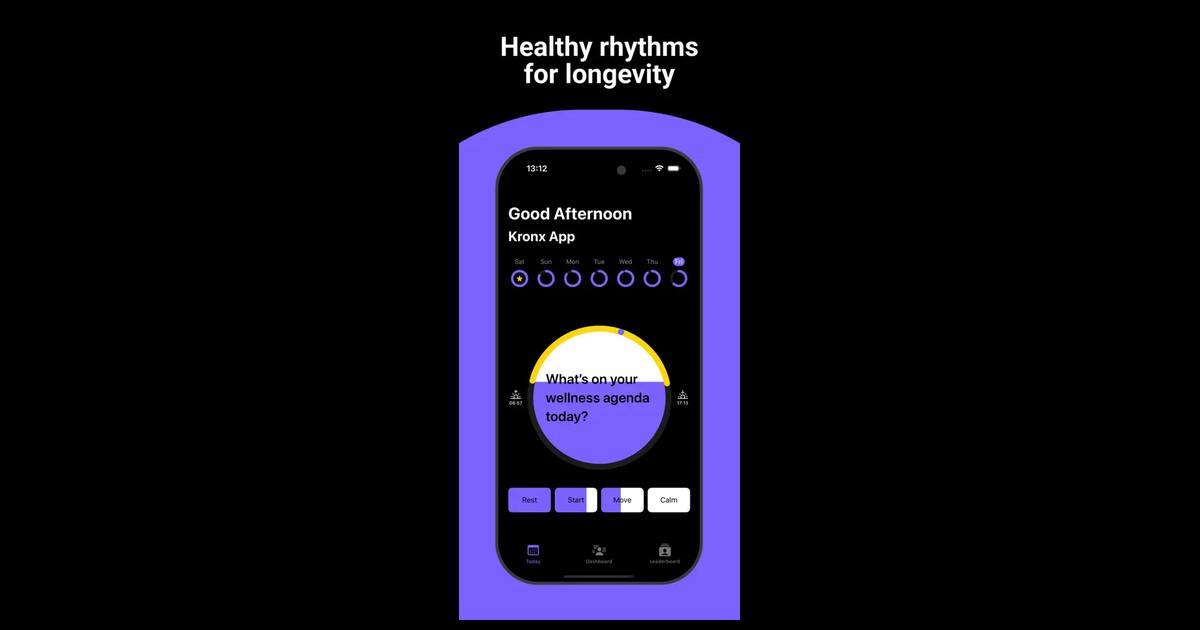
The Circadian Ring lays the whole day out in a circle: morning light, the strongest window for training, ideal meals, wind-down and bedtime. Timing and order are visible at a glance, which a vertical list of habits can never show.
One score, five inputs
Sleep, movement, hydration, mindfulness and nutrition aggregate into a single Wellness Score with a daily, weekly and monthly trend. One number is what makes the day comparable to yesterday, and the five inputs are what makes it actionable.
Apple Health does the measuring
Sleep, steps and workouts import automatically, so the metrics that people abandon manual tracking over are collected without any input at all. What stays manual is only what a phone cannot see: hydration, sunlight, mindfulness.
“Somebody who has read about cortisol still does not know what to do at seven in the morning. That gap is the product.”
The Rollout
Four habit modules carry the day: Rest, Start, Move and Calm. Around them sit the Wellness Score, the Circadian Ring, sunlight tracking, hydration with a daily goal and reminders, streaks with more than twelve badges, and the science behind each habit written into the app rather than linked out to a paper.
The interface is dark purple with orange and amber accents, warm rather than clinical, and it was designed for iPad as well as iPhone rather than stretched onto it afterwards. The app ships in Slovak, Czech, English, German and Spanish at 13.7 MB.
What this looks like in practice
A user opens the app before breakfast, sees that the ring wants light first and coffee later, marks the light, and the score updates. Sleep and steps were already imported overnight. The streak is intact, and the reason light comes first is one tap away in the app itself.
How it presents itself in the App Store
The official App Store creatives for the released app. Each carries the banner Apple shows on the listing.

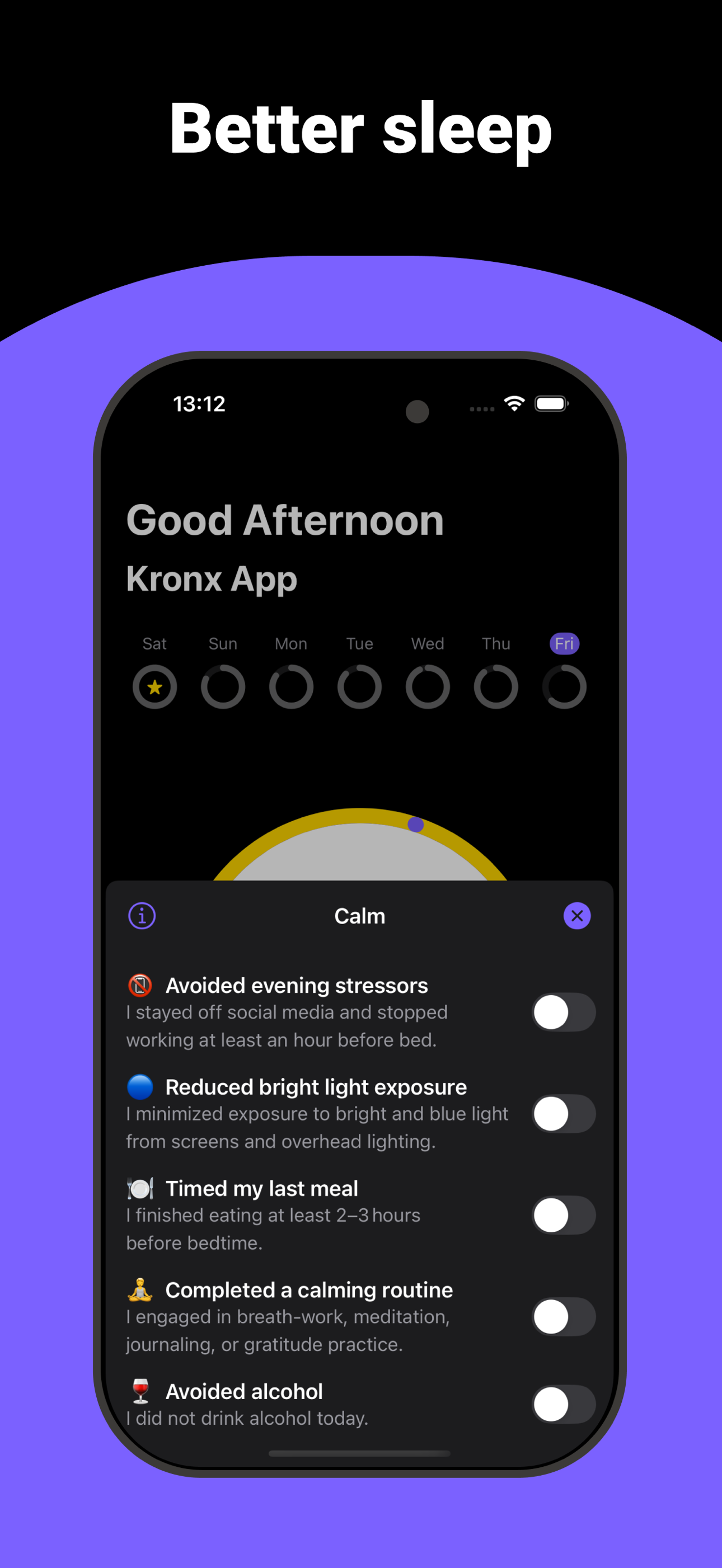
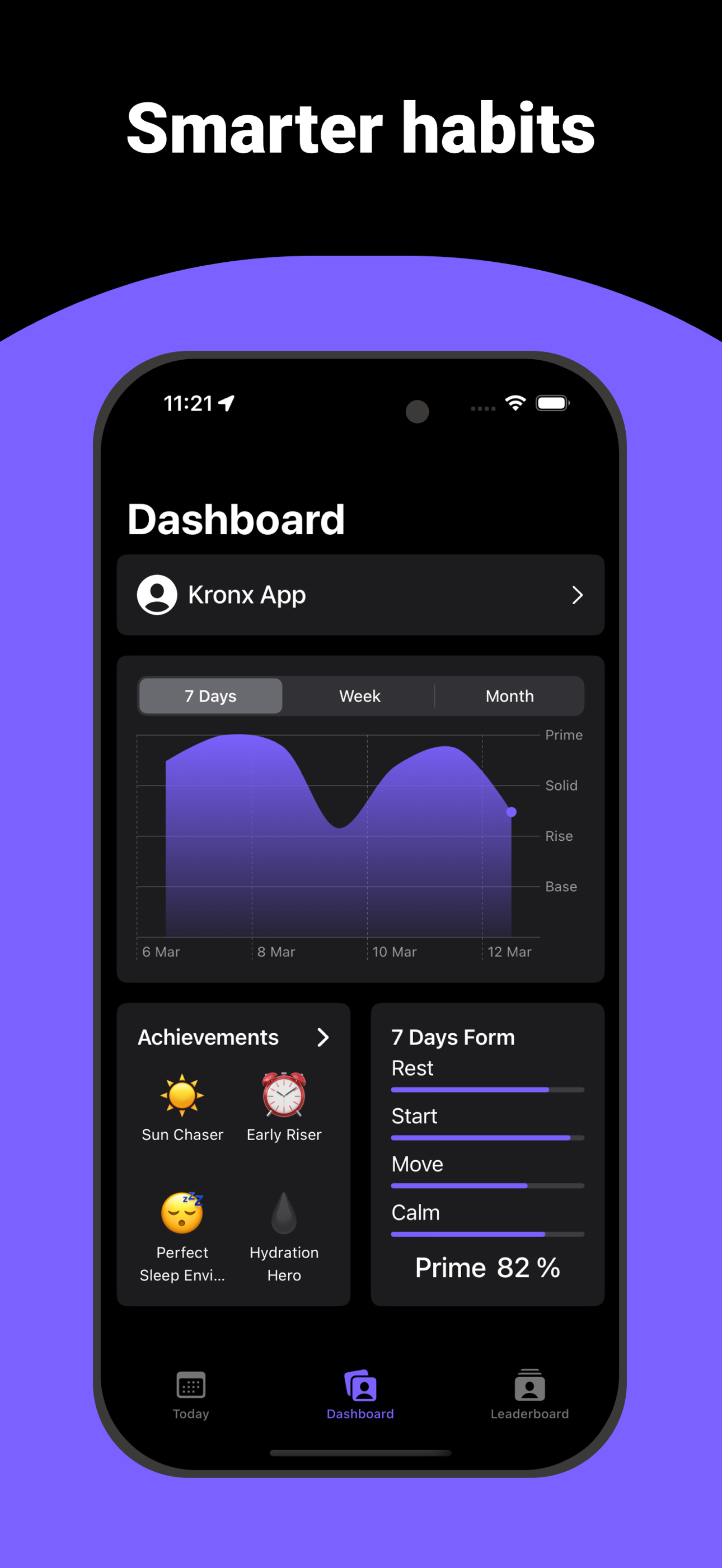


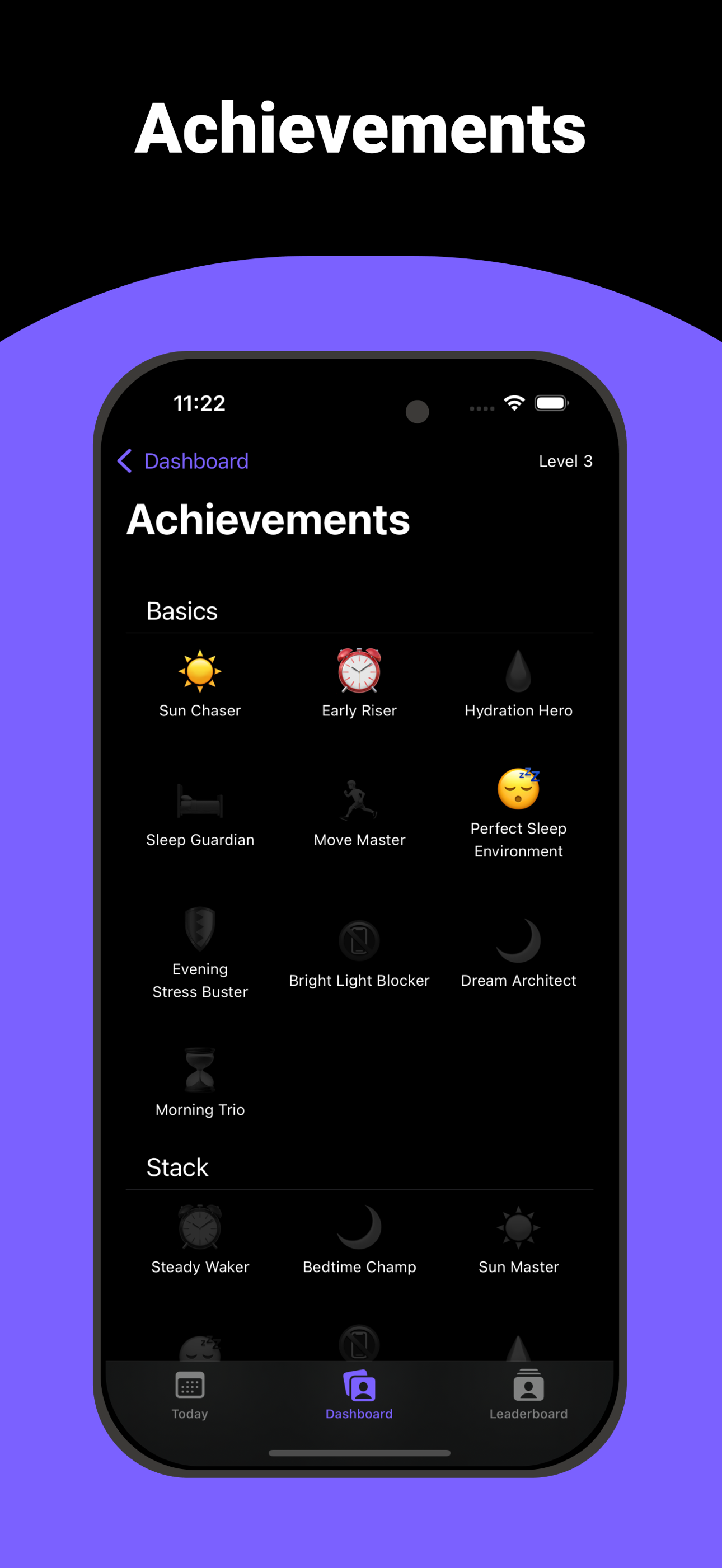
Official App Store screenshots, verified against the live listing in September 2026.
The Results
In the App Store today. What was designed and shipped.
36 or more screens designed for iOS and iPadOS
Four habit modules: Rest, Start, Move, Calm
A Wellness Score aggregating sleep, movement, hydration, mindfulness and nutrition
Streaks and more than twelve badges, without turning rest into a target
Five languages: SK, CZ, EN, DE, ES
Apple Health integration for sleep, steps and workouts
Why It Worked
The product commits to an action before it commits to an explanation. Every habit is a thing to do at a time of day, and the research sits behind it for the person who wants it. That order is what separates a usable routine from a well-sourced article.
Automatic tracking is what keeps the score honest over weeks. Sleep and steps arrive from Apple Health without anyone typing them, so the number does not quietly degrade into a record of the days somebody remembered to log.
Gamification was deliberately kept mild. Streaks and badges reward continuity, not intensity, because a recovery app that punishes a missed night is arguing against its own subject.
Want a similar transformation in your organization?
Let's talk about how Elevon can help your team too.
Book consultationRelated case studies